

/gender-rights-and-equity---diversity-equity-and-inclusion-(gre)/prseah-workshop-africa.jpeg?sfvrsn=1af4a86d_2)
In November 2025, a historic moment unfolded in Pretoria, South Africa, as the World Health Organization (WHO), in partnership with 42 African Member States, launched a groundbreaking initiative to embed accountability for preventing and responding to sexual exploitation, abuse, and harassment in joint health operations. This effort, known as the PRSEAH Accountability Framework, represents a decisive step toward reshaping global health systems and ensuring that communities and health workers are protected during every intervention.
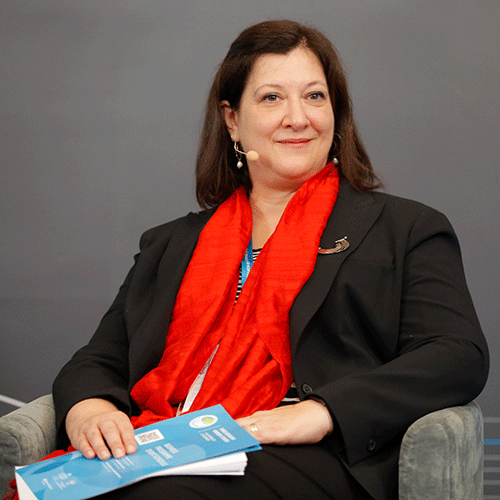
The framework was endorsed earlier in May 2025 at the 78th World Health Assembly, and now Africa is leading the way in operationalizing it. As WHO Director for Gender, Rights, Equity and Sexual Misconduct Prevention, Alia El-Yassir, stated, “Preventing and responding to sexual misconduct is inseparable from our shared commitment to gender equality, human rights, social justice and inclusion. When women are safe and respected, societies thrive.” Her words capture the essence of this initiative: safeguarding is not just about protection, it is about building trust, dignity, and resilience in health systems.
The framework is designed to address critical gaps in existing global clauses by including sexual harassment alongside exploitation and abuse. It focuses on three mutually reinforcing areas: establishing clear policies and codes of conduct that set minimum standards for preventing and responding to misconduct; equipping health personnel and partners with mandatory and specialized training, including modules for emergency responders and victim support teams; and ensuring robust incident management through safe reporting channels, survivor-centered assistance, and timely investigations backed by disciplinary or legal action.
These measures are not abstract—they are practical tools to restore trust in health care. The Pretoria conference advanced discussions on how to operationalize the framework through technical sessions on policy integration, emergency preparedness, risk management, and survivor support. Member States shared their approaches, achievements, and challenges, laying the foundation for institutionalizing safeguarding within health systems. This collective action is particularly vital in Africa, a region facing over 160 public health emergencies annually, where health workers embedded in vulnerable communities must uphold the highest ethical standards.
The global implications of this initiative are profound. As the world marks the 16 Days of Activism Against Gender-Based Violence campaign, the African-led framework serves as a reminder that health care must be a place of safety, never discrimination or violence. With this leadership, WHO now has a model for the world: every act of health care comes with accountability to those it serves, so communities can trust the care they receive. The framework is aligned with UN system-wide standards but goes further, filling gaps that have long left survivors without adequate protection.
It is a bold declaration that safeguarding is not optional—it is essential. The initiative also highlights Africa’s growing role as a global leader in health reform. By institutionalizing safeguarding, African governments are not only protecting their own citizens but also setting a precedent for other regions. This achievement demonstrates that Africa is not just a participant in global health discussions but a driver of change. The WHO has committed to scaling this approach globally, helping ministries of health adopt the PRSEAH Accountability Framework and embed safeguarding into health systems and emergency operations. The goal is clear: restore trust, uphold dignity, and ensure WHO and Member States protect the communities they serve.
This landmark initiative is more than a policy—it is a movement. It represents Africa’s determination to confront exploitation and harassment head-on, to build systems that prioritize human rights, and to ensure that health care is synonymous with safety. It is a reminder that safeguarding is inseparable from the broader goals of gender equality, social justice, and inclusion. The words of Alia El-Yassir resonate deeply: “When women are safe and respected, societies thrive.” This is not just a statement—it is a vision for the future of health care.
By embedding accountability into every level of health operations, Africa is charting a path toward a world where communities can trust the care they receive, where survivors are supported, and where health workers are empowered to uphold the highest ethical standards. The PRSEAH Accountability Framework is Africa’s gift to the world: a model of safeguarding that restores trust, protects dignity, and strengthens global health security for generations to come.