

“ Achieving these ambitions demands more than technical solutions – it requires political will, sustained investment and a unified approach that places Africa’s people at the centre ”
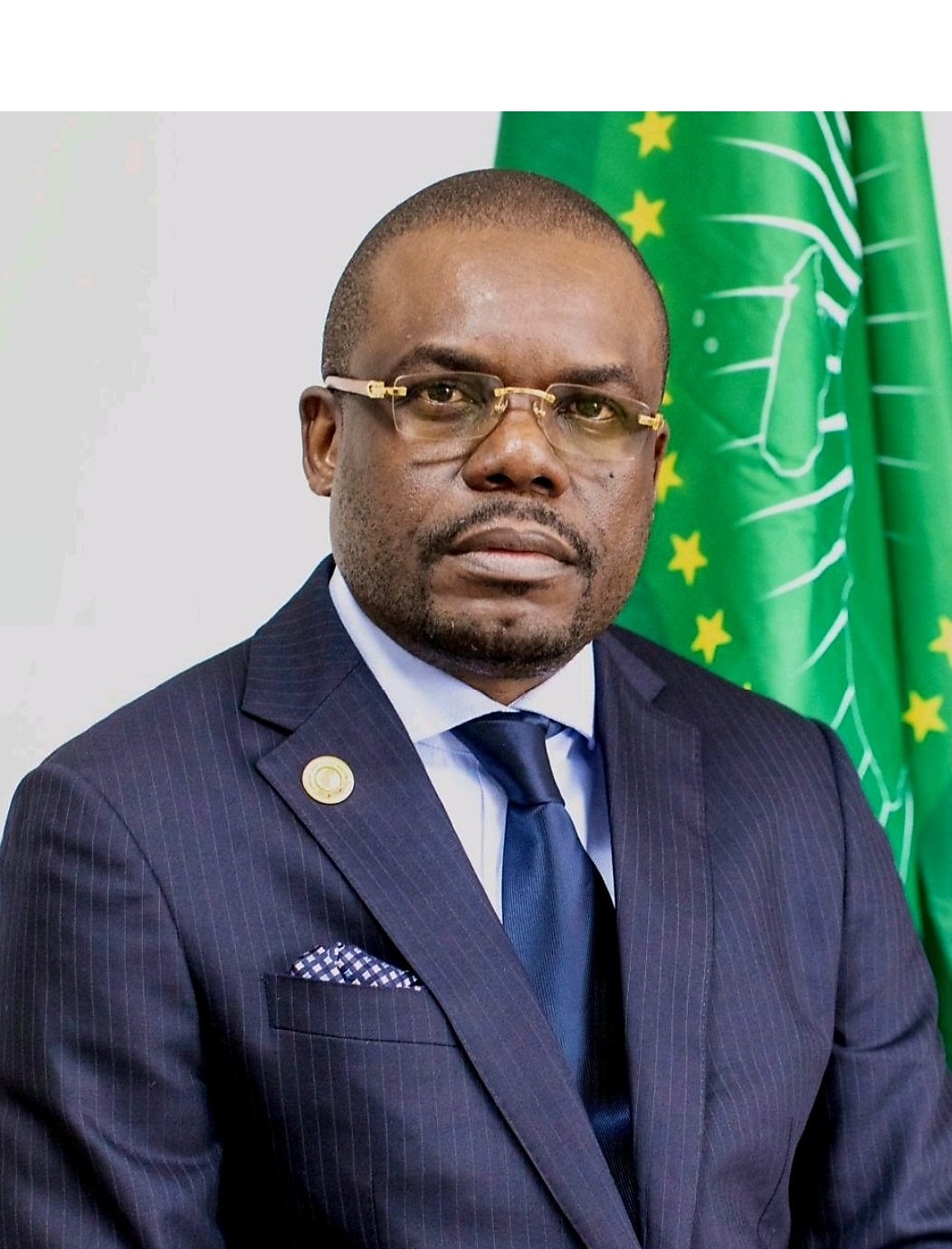
Dr. Jean Kaseya
The Africa Centres for Disease Control and Prevention (Africa CDC) has once again demonstrated its pivotal role in shaping the continent’s health future through the recent AU–EU Health Summit held in Luanda, Angola.
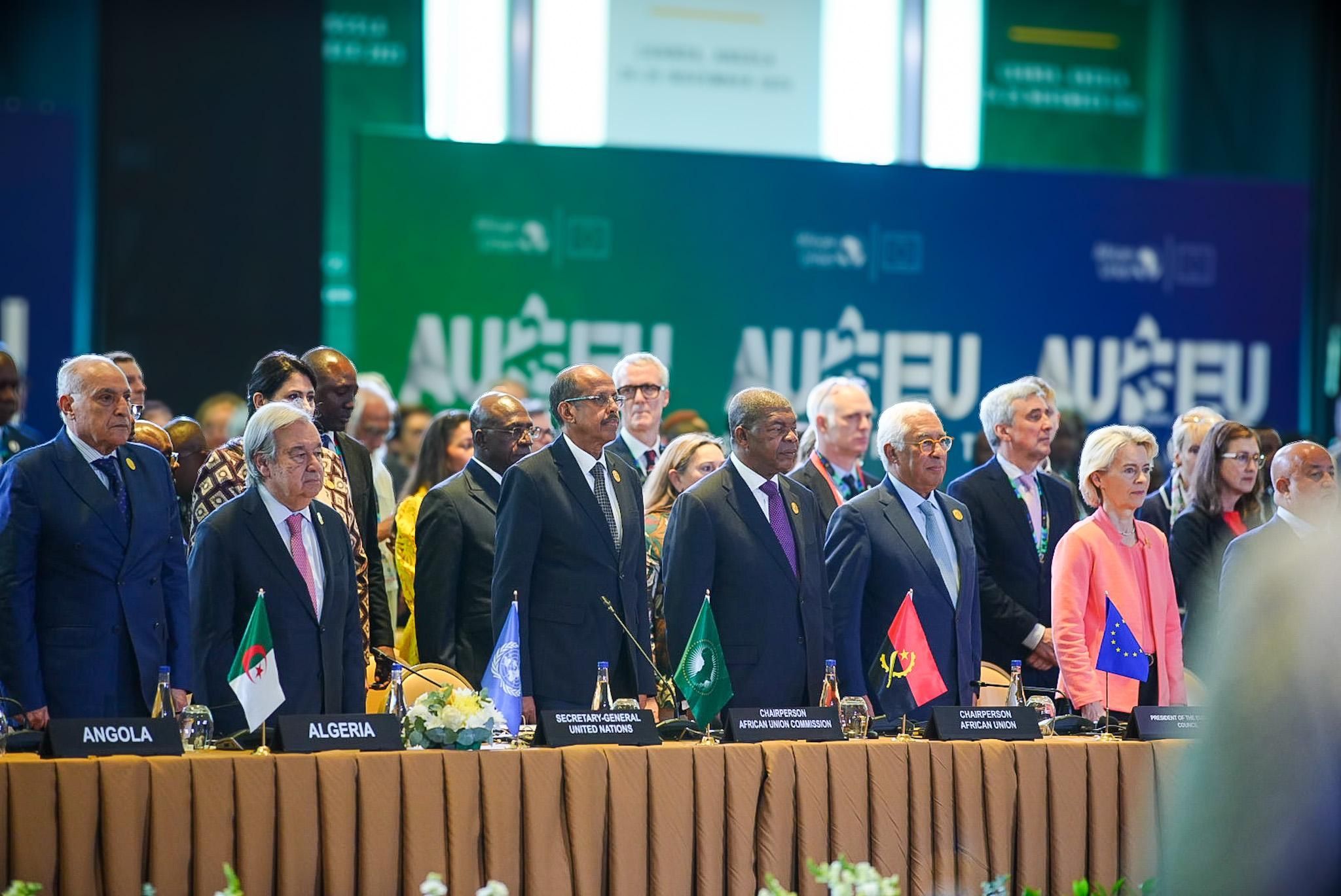
This gathering brought together Heads of State, Ministers, and strategic partners to deliberate on Africa’s health security and sovereignty, a theme that resonates deeply with the challenges and aspirations of the continent. The summit was not merely a ceremonial meeting but a defining moment to assess progress on shared priorities between Africa and Europe, particularly in areas such as pandemic preparedness, equitable access to vaccines and diagnostics, and the acceleration of local manufacturing to reduce dependency on external supply chains.
Dr. Jean’s words reflect the recognition that health security is not just about medical interventions but about the broader political and economic frameworks that enable resilience. The emphasis on people-centered strategies is crucial, as Africa’s health systems must be designed to respond to both current and future threats while ensuring inclusivity and equity.
The discussions at the summit reaffirmed a shared commitment to transforming Africa’s health landscape through innovation, partnership, and continental solidarity. This commitment is not abstract; it is grounded in tangible actions such as strengthening local vaccine production, enhancing diagnostic capabilities, and building robust supply chains that can withstand global disruptions.
The COVID-19 pandemic exposed the vulnerabilities of Africa’s reliance on external sources for critical health supplies, and the summit’s focus on local manufacturing is a direct response to that painful lesson. By investing in homegrown solutions, Africa positions itself not only to safeguard its populations but also to contribute meaningfully to global health security.
One of the most striking aspects of the summit was the alignment around clear priorities and the insistence on delivery at scale. As Dr. Kaseya emphasized, “alignment around clear priorities and delivery at scale are essential to building resilient health systems capable of responding to current and future threats.”
This statement highlights the importance of coherence in policy and action. Fragmented efforts, however well-intentioned, cannot achieve the level of resilience required to confront pandemics, antimicrobial resistance, or other emerging health challenges. The summit’s insistence on scale reflects an understanding that Africa’s health challenges are continental in nature and require solutions that transcend national boundaries.
The theme of sovereignty was also central to the summit’s deliberations. Health sovereignty, in this context, refers to Africa’s ability to make independent decisions about its health priorities, resources, and strategies without undue reliance on external actors. This does not mean isolation; rather, it signifies a balanced partnership where Africa engages with global partners from a position of strength and self-determination.
The summit’s focus on sovereignty is particularly relevant in the context of vaccine equity, where Africa has often been at the mercy of global supply chains and donor-driven agendas. By asserting sovereignty, Africa CDC and its partners are advocating for a future where the continent can chart its own course in health security.
The summit also highlighted the role of innovation in transforming Africa’s health systems. Innovation here is not limited to technology but extends to governance, financing, and community engagement. For instance, the emphasis on local manufacturing is as much about innovative financing models as it is about technological capacity. Similarly, pandemic preparedness requires innovative governance structures that can coordinate responses across multiple countries and regions. The summit’s recognition of innovation as a cross-cutting theme reflects a holistic understanding of health security.
Equally important was the reaffirmation of partnership as a cornerstone of Africa’s health security strategy. The AU–EU collaboration exemplifies how continental solidarity can be complemented by international cooperation. The summit demonstrated that Africa’s health security is not a continental issue alone but a global one.
Pandemics do not respect borders, and Africa’s resilience contributes to global resilience. By engaging with the European Union and other partners, Africa CDC is ensuring that Africa’s voice is heard in global health governance while also securing the resources and expertise needed to advance its priorities. The summit’s outcomes are not limited to declarations; they are expected to translate into concrete actions.
The commitment to accelerating local manufacturing, for example, will require investments in infrastructure, human capital, and regulatory frameworks. Similarly, the focus on equitable access to vaccines and diagnostics will necessitate policy reforms and international negotiations. The summit provided a platform to align these actions with continental priorities, ensuring that they are not piecemeal but part of a coherent strategy.
The broader significance of the summit lies in its affirmation of Africa’s agency in global health. For too long, Africa has been portrayed as a passive recipient of aid and interventions. The AU–EU Health Summit challenges this narrative by positioning Africa as an active participant in shaping global health security. Dr. Kaseya’s insistence that Africa’s people must be at the centre of health strategies reflects this shift in perspective. It is a call to move beyond dependency and towards empowerment.
In conclusion, the AU–EU Health Summit in Luanda was more than a diplomatic gathering; it was a milestone in Africa’s journey towards health security and sovereignty. By focusing on pandemic preparedness, equitable access, local manufacturing, innovation, and partnership, the summit laid the foundation for a resilient health system that can withstand future threats.
The words spoken at the summit, such as “achieving these ambitions demands more than technical solutions – it requires political will, sustained investment and a unified approach that places Africa’s people at the centre,” will resonate as guiding principles for Africa’s health future. The challenge now is to translate these principles into action, ensuring that Africa’s health systems are not only resilient but also equitable and sovereign.
Source: Africa CDC Weekly Brief | 24 – 30 November 2025 – Africa CDC