

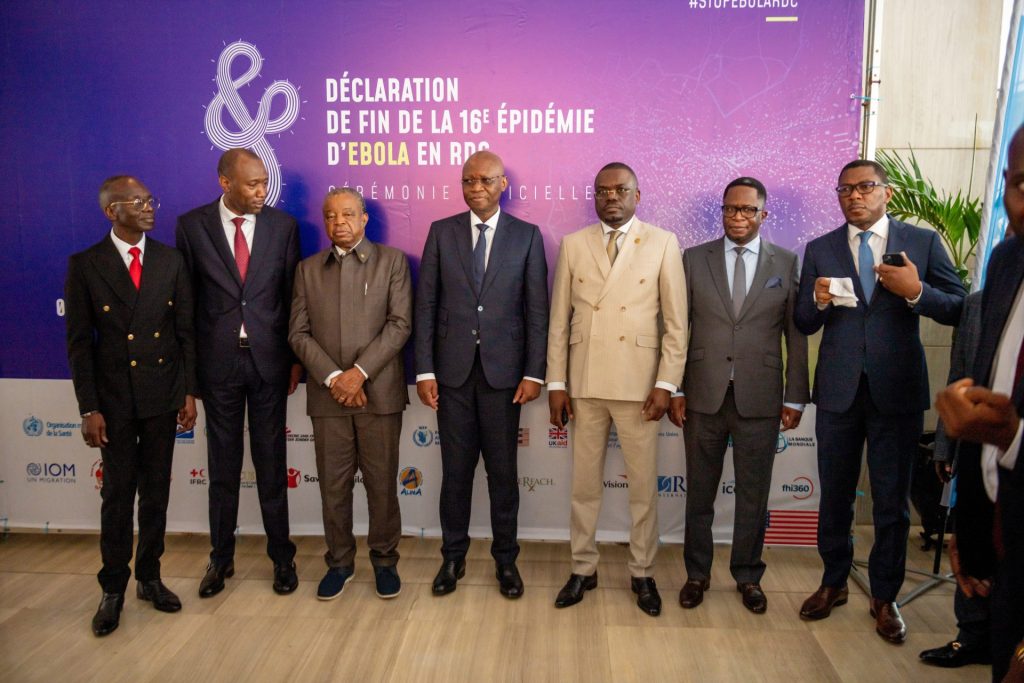
The Democratic Republic of Congo has once again demonstrated its resilience in the face of one of the world’s most feared diseases. On December 1, 2025, the Africa Centres for Disease Prevention and Control (Africa CDC) officially declared the Ebola outbreak in the Kasai Province over, marking 42 days without any new cases and following the recovery of the last confirmed patient. This announcement was not simply a matter of statistics; it was a testament to human determination, scientific progress, and the courage of communities who bore the brunt of the epidemic.
Dr. Jean Kaseya, Director General of Africa CDC, captured the spirit of this achievement when he stated, “This success is the result of exceptional determination and exemplary coordination.” His words reflect the collective effort of the Congolese government, the Ministry of Health led by Dr. Roger Kamba, the country’s National Institute of Public Health, and countless field teams who worked tirelessly to contain the outbreak. It was not a solitary victory but one forged through collaboration, sacrifice, and an unwavering commitment to saving lives.
The outbreak, which was the sixteenth recorded in the DRC, began on September 4, 2025, with a tragic index case: a 34-year-old pregnant woman admitted with high fever and repeated vomiting. Laboratory tests confirmed the Zaire strain of Ebola, a reminder of the virus’s deadly persistence.
From that moment, the nation faced a daunting challenge. By the time the outbreak was declared, 15 deaths and 28 suspected cases had already been reported across Bulape and Mweka health zones, including four healthcare workers. The toll was heavy, but the response was swift. Over the course of the outbreak, 53 confirmed cases, 11 probable cases, and 34 deaths among confirmed patients were recorded, bringing the likely total deaths to 45.
The last active case was discharged from a treatment center on October 19, 2025, beginning the crucial 42-day countdown that would determine whether the outbreak was truly contained. Thanks to intense surveillance, community engagement, and extensive vaccination campaigns, no new cases emerged.
Vaccination proved to be a cornerstone of the response, with more than 48,000 doses deployed and over 44,400 individuals vaccinated, including frontline health workers and high-risk contacts. This achievement highlights the importance of preparedness and rapid mobilization in combating infectious diseases.
Dr. Kaseya emphasized that the end of an outbreak is not the end of the work. He remarked, “Managing an epidemic does not end when the outbreak ends, but rather it is at that moment that the most decisive work begins.” His statement points to the necessity of rigorous documentation and analysis of each epidemic. What worked, what failed, and what shifted the trajectory must be studied to strengthen alert systems, reinforce laboratories, and optimize coordination for future crises. The lessons learned from Kasai will not only guide the DRC but also inform strategies across the continent.
The human dimension of this outbreak cannot be overlooked. Families were torn apart, economies disrupted, and communities shaken. Yet, amid the suffering, there was resilience. Communities engaged actively in surveillance and vaccination efforts, showing courage that Dr. Kaseya himself acknowledged as an inspiration for the continent. The outbreak revealed the true impact of Ebola not just on health systems but on social cohesion and trust. It reminded the world that epidemics are not merely medical events; they are deeply human crises that test the bonds of society.
The Africa CDC has committed to ensuring that the lessons of this outbreak are not forgotten. Dr. Kaseya announced the allocation of one million U.S. dollars to enable the Director of Africa CDC’s Science and Innovation Division to begin comprehensive post-epidemic studies in collaboration with the DRC’s Ministry of Health, the National Institute of Public Health, the World Health Organization, and other partners. These studies will examine the outbreak’s trajectory, the effectiveness of interventions, and the broader impact on families and economies. Such research is vital to building stronger systems that can withstand future threats.
The declaration of the end of the Ebola outbreak in Kasai Province is more than a milestone for the DRC; it is a beacon of hope for Africa and the world. It demonstrates that with coordination, science, and community engagement, even the most formidable diseases can be defeated. It also serves as a reminder that vigilance must never wane. As Dr. Kaseya noted, “Every outbreak must be rigorously documented – what worked, what failed, what shifted the trajectory, and what needs improvement.” These words are not just guidance for policymakers; they are a call to action for all who recognize the global nature of health security.
The story of Kasai is one of tragedy, resilience, and triumph. It began with the loss of a young woman and ended with the survival of a nation’s spirit. It showed the world that epidemics can be contained when communities, governments, and international partners unite. It also highlighted the importance of vaccines, surveillance, and preparedness in the fight against infectious diseases. Most importantly, it reminded us that the battle against Ebola, and against future epidemics, is not only about science but about humanity.
In the years to come, the lessons of Kasai will shape Africa’s response to health emergencies. They will strengthen laboratories, mobilize communities, and guide risk communication. They will also remind us that epidemics are not isolated events but part of a larger struggle to protect families, economies, and social cohesion. The DRC’s victory over Ebola is therefore not just a national achievement but a continental one, a testament to Africa’s growing capacity to confront and overcome public health challenges.
The declaration of the end of the outbreak is a moment of celebration, but it is also a moment of reflection. It calls on us to honor the lives lost, to support the survivors, and to continue building systems that can prevent future tragedies. It is a reminder that in the face of adversity, humanity can prevail. The courage of the people of Kasai, the dedication of health workers, and the leadership of institutions like Africa CDC have shown the world that resilience is possible, and that triumph over Ebola is not just a dream but a reality.
Source: Ebola Outbreak in the DRC Declared Over – Africa CDC