
Madagascar is at a pivotal moment in the global fight against leprosy, where early detection, targeted community screening, and free multi–drug therapy are combining to reduce disability, break transmission chains, and restore dignity to affected people. Each year the country records between 1,500 and 2,000 new leprosy cases, and in 2024 there were 1,713 new diagnoses, which places Madagascar among the 23 priority countries for the World Health Organization’s leprosy elimination efforts. These figures highlight why intensified, evidence-driven strategies matter now more than ever for public health in Madagascar and for global elimination goals.
The story of progress in Madagascar is not abstract policy talk; it is visible in remote districts where active case finding has changed outcomes for individuals and communities. In Ambatoboeny district, one of the most affected areas, detection rates reached roughly 40 cases per 100,000 people, compared with a national average near 5 per 100,000, and the number of newly diagnosed people rose from 95 in 2024 to 132 in 2025—a rise that reflects improved outreach and screening rather than a sudden surge in disease. These numbers show that when health teams go into communities, they find people who otherwise would remain undiagnosed and untreated, often only seeking care after irreversible nerve damage and disability have occurred.
Active screening campaigns are proving to be a game-changer because they combine medical diagnosis with community engagement, stigma reduction, and follow-up care. Mobile teams, community health workers, radio messaging in local languages, and posters have been used to mobilize people for screening. In Ambatoboeny, active screening accounted for a large share of new case detection: in 2023, 64 of 110 new cases were identified through active screening, and in 2024, 62 of 95 cases came from the same approach. During intensified campaigns in 2025, teams detected 16 new cases among 91 people screened and successfully located eight patients who had previously been lost to follow-up, reintegrating them into care. These outcomes demonstrate that proactive outreach not only finds new cases but also restores continuity of treatment for people who had stopped receiving care.
Geography and social beliefs create dual barriers to early diagnosis in Madagascar. Seasonal flooding of the Kamoro and Betsiboka rivers isolates communities for months, making routine screening and treatment access difficult. At the same time, persistent myths—such as beliefs that leprosy is hereditary, a social taboo, or the result of witchcraft—fuel stigma and delay care-seeking. The combination of physical isolation and social exclusion increases the risk of severe, disabling disease. Addressing these barriers requires integrated strategies that bring services to the most remote places while also changing perceptions through culturally sensitive education and community-led anti-stigma campaigns.

Clinical training and diagnostic tools are essential complements to community outreach. The World Health Organization supports training for clinicians to recognize atypical presentations of leprosy and equips health services with specialized diagnostics such as PCR testing on nerve biopsies and nerve ultrasound to detect early nerve involvement. Continuous, free access to multi–drug therapy remains the cornerstone of treatment, preventing progression to disability and reducing transmission risk. These clinical investments, paired with operational strategies for active case finding and contact management, form a comprehensive approach that can accelerate progress toward the WHO’s elimination target by 2030.
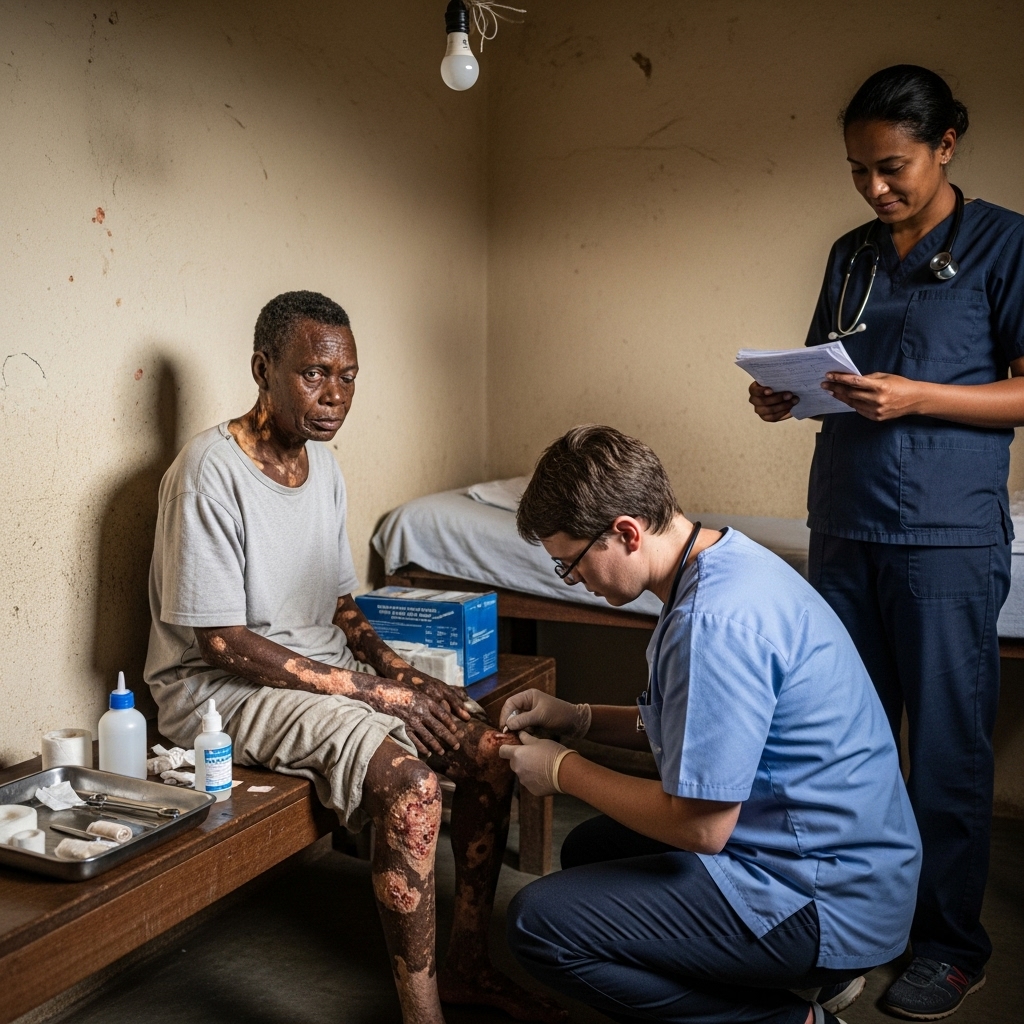
Human stories illustrate why these technical measures matter. Freddy, a 24-year-old cart driver from Ambatoboeny, experienced numbness, burning sensations, and loss of feeling in his left leg for months. Visible skin patches exposed him to mockery and social exclusion. When medical teams arrived during a screening campaign, Freddy was diagnosed with leprosy and entered treatment—an outcome that would have been unlikely without active outreach. His case highlights how early diagnosis restores not only health but also the ability to work and provide for family, while reducing the risk of permanent disability.
Beyond individual care, post-exposure prophylaxis and contact follow-up are critical to interrupting transmission. Madagascar’s intensified control activities include offering post-exposure chemoprophylaxis to close contacts of diagnosed patients, a strategy that reduces the likelihood that exposed people will develop disease. The absence of new cases among children under 14 in recent campaigns is an encouraging sign that transmission may be declining in targeted areas, though this finding requires continued contact tracing and surveillance to confirm long-term trends. Sustained monitoring and follow-up are essential to validate early successes and to ensure that gains are not reversed.
Equity is central to the public health response. Highly isolated populations finally gain access to screening, treatment, and accurate information through integrated campaigns that combine clinical services with social mobilization. This approach reduces disabilities, restores dignity, and dispels long-standing misconceptions about leprosy. Community health workers play a pivotal role in this process by conducting awareness-raising, identifying suspected cases, and supporting patients through treatment completion. Strengthening local capacity ensures that interventions are culturally appropriate, sustainable, and more likely to be accepted by communities.
For policymakers, donors, and health program managers, Madagascar’s experience offers clear lessons. First, active case finding must be prioritized in endemic districts because passive detection alone misses many cases until disability has occurred. Second, combining clinical capacity building with community engagement multiplies impact: trained clinicians and diagnostic tools increase the accuracy of detection, while community mobilization increases uptake. Third, addressing logistical barriers—such as seasonal isolation due to flooding—requires flexible, context-specific planning, including mobile clinics and contingency strategies for hard-to-reach areas. Fourth, anti-stigma work is not optional; it is a public health intervention that increases early care-seeking and treatment adherence. Finally, sustained funding and political commitment are necessary to maintain momentum toward elimination.
Global partners have a role to play in scaling what works. The WHO, national health authorities, and foundations such as the Raoul Follereau Foundation are already supporting Madagascar’s intensified activities through training, diagnostics, and operational support. Continued international collaboration can help expand active screening campaigns, ensure uninterrupted supply of multidrug therapy, and support research into improved diagnostics and preventive strategies. Donors and technical partners should prioritize interventions that demonstrate measurable reductions in disability and transmission, and invest in monitoring systems that track outcomes over time.
For health advocates and civil society, the message is clear: community-led education and anti-stigma initiatives are powerful tools. Radio messaging in local languages, community dialogues, and visible endorsements from trusted local leaders can shift perceptions and encourage people to seek screening early. Reintegration of people who have stopped treatment is a vital component of care; locating and supporting those lost to follow-up not only improves individual outcomes but also reduces community-level transmission risk. These human-centered strategies amplify the technical gains achieved by clinical teams.
Looking ahead, Madagascar’s path toward leprosy elimination by 2030 will depend on sustaining and scaling proven interventions. Early detection through active screening, combined with post-exposure prophylaxis, free multi–drug therapy, clinician training, and community engagement, creates a robust framework for reducing new cases and preventing disability. The absence of child cases in recent campaigns offers hope, but it must be confirmed through rigorous contact follow-up and surveillance. If Madagascar continues to invest in these integrated strategies, the country can serve as a model for other endemic settings seeking to accelerate progress toward global elimination.
Madagascar’s intensified leprosy control activities demonstrate that early detection and active screening are essential to reducing disability and interrupting transmission. Integrated approaches that combine clinical training, diagnostics, post-exposure prophylaxis, and community engagement produce measurable results in endemic districts. Continued investment, political will, and international partnership are required to sustain progress and achieve the WHO’s elimination goal by 2030.