

There’s no cause for panic; nobody should panic.
Honorable Kwabena Mintah Akandoh, Health Minister
Ghana has activated national emergency health protocols to protect the country from a potential Ebola threat, a decisive public health action that places surveillance, rapid testing, and community cooperation at the center of the response. The Health Minister led a high-level operational assessment at Accra International Airport and toured the Noguchi Memorial Institute for Medical Research and the Ghana Infectious Disease Centre to evaluate screening, diagnostic capacity, and readiness for rapid response.
The World Health Organization has declared the rare Bundibugyo Ebola strain a Public Health Emergency of International Concern, a designation that has prompted countries to heighten vigilance and strengthen cross-border surveillance. Ghana’s activation of emergency protocols is a preemptive, evidence-based measure designed to prevent importation and local transmission of a highly infectious disease. Rapid detection, accurate laboratory testing, and coordinated public health measures are essential to stop outbreaks before they spread, and Ghana’s leadership has emphasized that institutional readiness must be matched by public cooperation.
At Accra International Airport, officials reviewed passenger screening points and holding bays and concluded that while initial checks are functional, the state must accelerate the adoption of advanced digital detection systems to reduce human error and improve detection speed. The Minister’s inspection was part of a multi-site working visit intended to stress-test the nation’s readiness and cross-border surveillance capabilities. The Noguchi Memorial Institute’s director assured the delegation that the facility’s biosafety laboratories are fully resourced and structurally prepared to handle accurate, high-speed differential testing for suspected Ebola cases, a critical capability for early containment.
Public messaging from Ghanaian authorities has been clear and measured: readiness without panic. Officials have reintroduced strict hygiene mandates and issued an advisory to suspend mass gatherings effective immediately to minimize transmission risk. The Health Minister urged collective responsibility, stating, “It’s very important for all of us to cooperate.” These direct quotes are intended to balance calm with urgency so that communities follow safety measures without fear-driven disruption.
The emergency protocols that have been activated focus on several high-impact areas: enhanced screening at land, sea, and air borders; rapid isolation and testing of suspected cases; strengthened laboratory diagnostics; contact tracing; and clear public health communications. Digital detection tools and improved data systems are prioritized to reduce human error in screening and to speed up case identification and reporting. These measures are designed to preserve healthcare capacity while preventing community spread.
For residents, the practical implications are immediate and actionable. Reinstate frequent handwashing, use of hand sanitizers, and respiratory etiquette in public spaces. Comply with the advisory to postpone or cancel large events until authorities lift restrictions. Seek immediate medical attention if you experience fever, severe weakness, vomiting, diarrhea, unexplained bleeding, or other concerning symptoms after travel or contact with travelers. Cooperate fully with contact tracers and provide accurate information to speed containment and protect loved ones. These steps reduce transmission risk and help health systems respond effectively.
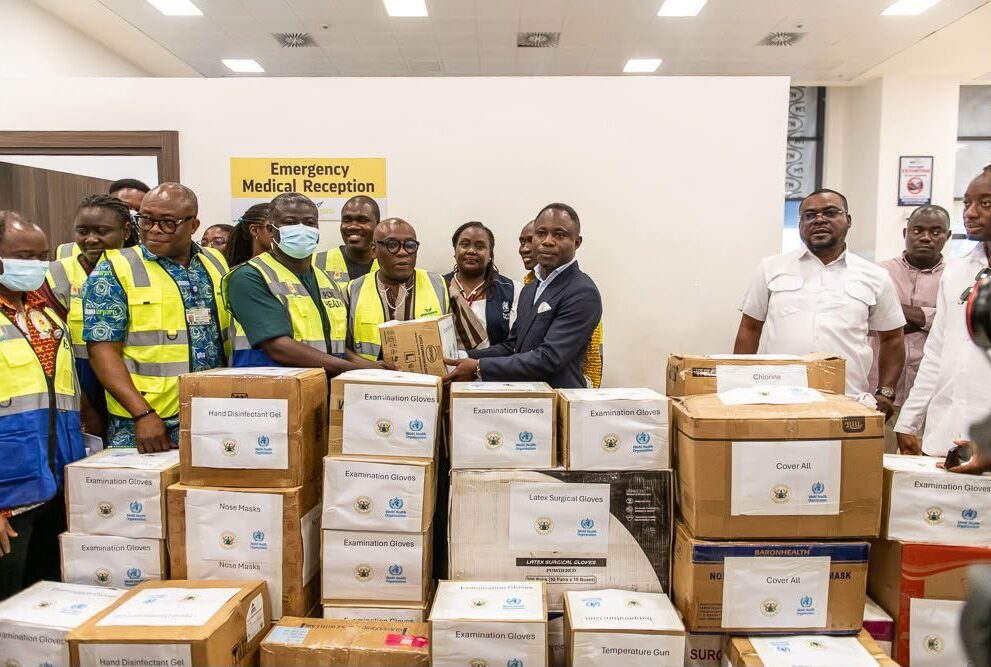
Honorable Kwabena Mintah Akandoh during his inspection of the Accra International Airport and the Noguchi Memorial Institute for Medical Research and the Ghana Infectious Disease Centre
Travelers entering or leaving Ghana should expect enhanced screening at airports and land borders and should prepare to comply with screening procedures. If travel is planned, check airline and government advisories and consider postponing non-essential trips to affected regions if advised. Travelers returning from areas with active Ebola transmission should monitor their health for the recommended period and report any symptoms immediately. These precautions protect both travelers and host communities and help public health authorities maintain accurate surveillance.
Ghana’s biomedical laboratories and international partners are central to the response. The Noguchi Memorial Institute and the Ghana Infectious Disease Centre have been assessed and confirmed to have biosafety infrastructure and resources for accurate, rapid testing. International partners, including the World Health Organization, are collaborating with Ghanaian authorities to strengthen scientific and operational responses, enhancing diagnostic accuracy, case management, and cross-border coordination.
Community leaders, event organizers, and institutions must act now to review contingency plans, reinforce hygiene protocols, and prepare to implement temporary restrictions on gatherings if required. Transparent communication with the public and coordination with health authorities will be essential to maintain public trust and ensure compliance with safety measures. The government’s approach—combining screening, laboratory readiness, digital detection upgrades, and community engagement—aims to detect and contain any imported case quickly while minimizing social disruption.
The balance between vigilance and calm is the central theme of Ghana’s response. Authorities emphasize preparedness without panic and stress, readiness and cooperation, are the most powerful tools against outbreaks. The government’s immediate activation of emergency protocols is a proactive, measured response to a global public health alert, and it underscores the shared responsibility of citizens, travelers, and institutions to follow official guidance, practice strict hygiene, and report symptoms promptly. Together, these actions form the frontline defense that protects lives and preserves public health stability.
Ghana’s activation of emergency health protocols is a decisive step that reflects global concern about the Bundibugyo Ebola strain and a national commitment to rapid detection, laboratory readiness, and public cooperation. The situation requires attention but not panic; follow official channels for updates, adhere to hygiene and travel advisories, and support community measures that reduce transmission risk. “It’s very important for all of us to cooperate,” the Health Minister said, and that cooperation is the single most effective defense against the spread of infectious disease.
Source: Ghana activates emergency health protocols over possible Ebola threat