

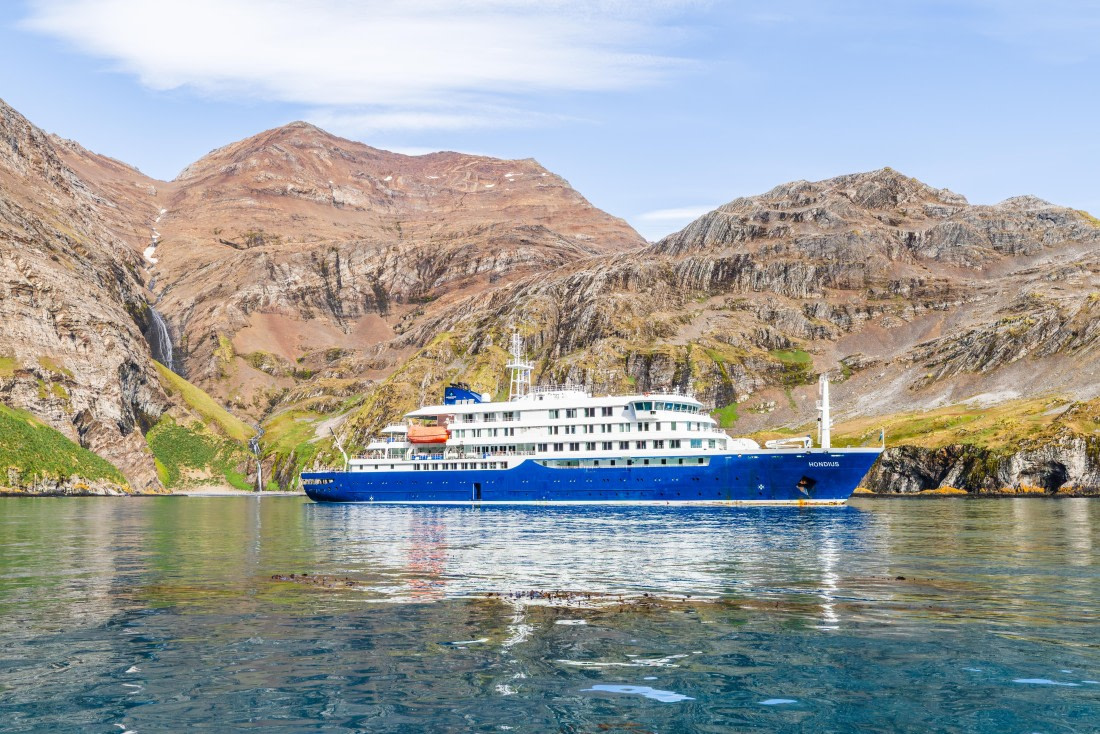
The world has grown increasingly familiar with the concept of infectious disease outbreaks disrupting international travel, but the emergence of a confirmed Hantavirus outbreak aboard the cruise ship MV Hondius has presented global health authorities with a challenge unlike any in recent memory. What began as an isolated health concern on a single vessel anchored off the coast of Tenerife in Spain’s Canary Islands has rapidly escalated into a complex, multinational public health operation stretching across continents and testing the limits of international disease containment in real time.
As footage of the ongoing evacuation circulates across news networks, the video capturing this extraordinary response offers a rare and sobering window into what a coordinated global health emergency looks like when the threat is not confined by borders. The images are striking — military personnel ferrying passengers ashore in small groups, sealed buses transferring evacuees directly to airports, and government officials on multiple continents scrambling to arrange dedicated repatriation flights for their citizens. Behind every frame lies a story of escalating concern, urgent decision-making, and the sobering reality that one positive test result can unravel even the most carefully managed containment operation.
The situation began to take on truly alarming dimensions when a French passenger aboard the MV Hondius developed symptoms during a chartered flight from Tenerife to Paris. The implications were immediate and severe. All five passengers evacuated on that same chartered flight were placed under immediate isolation the moment the symptomatic case was identified. French health authorities responded swiftly, demonstrating the kind of rapid containment decision-making that public health experts have long argued is the only effective tool in the early stages of a viral outbreak. The fact that symptoms emerged mid-flight rather than on the ground introduced a new layer of complexity — one that will likely inform aviation health protocols for years to come.
The situation among American passengers proved equally troubling and, in some respects, even more significant from an epidemiological standpoint. Of the 17 American nationals evacuated from the MV Hondius, one passenger presented with mild symptoms while another tested positive for the Andes strain of Hantavirus. This detail is particularly critical and cannot be overstated in its implications. Unlike most strains of Hantavirus, which spread exclusively through contact with infected rodents or their waste, the Andes strain is the only known variant of the virus capable of human-to-human transmission. Its presence aboard the vessel transforms what might otherwise be a contained rodent-linked outbreak into a scenario with the potential for sustained person-to-person spread — a scenario that public health officials classify in an entirely different risk category.
The confirmation of the Andes strain in the US case has inevitably intensified scrutiny over how the virus first entered the ship’s environment, how many passengers may have been exposed, and whether any undetected transmissions occurred in the days or weeks prior to the evacuation. These are questions that virologists, epidemiologists, and biosecurity experts will be working to answer for some time, and the answers will carry significant weight for how cruise line health regulations are structured going forward.

For British passengers, the experience of returning home came with an immediate and intensive health monitoring process. Twenty British nationals, accompanied by a German resident and a Japanese passenger who had been travelling in their group, were flown to the United Kingdom and transported to Arrowe Park Hospital on the Wirral. The facility — which gained international recognition during earlier disease response operations — became the site of an initial 72-hour observation period designed to identify any early-stage symptomatic presentations. That observation period was not, however, the end of their confinement. All individuals were subsequently placed under a 42-day quarantine period, reflecting the medical community’s serious regard for the incubation timeline of Hantavirus and the uncertainty surrounding exposure windows on a vessel where an Andes strain case had been confirmed.
The 42-day figure is a meaningful one. It is considerably longer than the quarantine periods typically associated with most common viral illnesses and speaks to the medical caution being exercised at every level of this response. Public health officials are acutely aware that with a disease whose most dangerous strain has demonstrated human-to-human transmission, cutting corners on observation timelines could have consequences that extend far beyond the individuals initially exposed.
Back in Spain, the logistical operation of removing passengers from the MV Hondius was described by Spanish authorities as successful, with containment protocols reported as strict and systematic throughout. By the time the video report was filed, approximately 90 passengers had been successfully moved off the vessel. The remaining passengers were in the process of being repatriated to their respective home countries, with the Netherlands and Australia among those receiving nationals on dedicated government-arranged flights. The ship itself, with its crew still aboard, continued its passage to Rotterdam — a detail that raises its own set of questions about crew health monitoring and the biosecurity measures being applied to those who spent the longest continuous period in the vessel’s environment.
Yet despite the official characterisation of the evacuation as a success, the video makes clear that a growing unease has settled over health authorities in multiple countries. The emergence of symptomatic cases after passengers had already disembarked — including the French case that developed during a flight — exposed a fundamental vulnerability in the containment model that had been applied aboard the ship. Screening protocols carried out prior to departure were not sufficient to identify all individuals who would go on to show symptoms, and this gap between screening and symptom onset is a clinical reality that no evacuation protocol can fully eliminate when dealing with a virus whose incubation period can stretch across several weeks.

The concern being voiced is not simply about those who have already tested positive or shown symptoms. It is about the unknown — the passengers who left the ship feeling healthy, boarded their flights, arrived in their home countries, and are now dispersed across the world in communities where local health providers may have little experience with Hantavirus presentations. Each of those individuals represents a potential surveillance gap, and the task of ensuring that every one of them is being monitored, has access to informed medical care, and understands when to seek urgent attention is a logistical and communicative challenge of considerable scale.
This outbreak and the international response it has generated offer a compelling case study in the realities of global health security in an era of mass international travel. Infectious diseases do not observe visa regulations or flight manifests. A single confirmed case aboard a vessel carrying nationals from 23 countries becomes, almost instantly, a 23-country problem — and the infrastructure required to manage that problem simultaneously, coherently, and without critical gaps is one that the world is still in the process of building.
The MV Hondius situation is still unfolding, and the full picture of how many passengers were infected, how the virus entered the vessel, and how effectively the repatriation and quarantine operations will prevent further community spread remains to be seen. What is already evident, however, is that this event will serve as a defining reference point in conversations about cruise ship biosecurity, international disease surveillance, and the specific dangers posed by the Andes strain of Hantavirus. For the passengers currently in quarantine across the UK, France, the United States, Australia, and beyond, the immediate concern is their own health and the wellbeing of their families. For the global health community, the concern reaches further — to the systems, the protocols, and the international agreements that will determine whether the next outbreak of this kind is contained faster, or allowed to slip further through the cracks.
What this moment demands is clarity, transparency, and a continued commitment from every government involved to share information rapidly, coordinate their medical responses without rivalry or hesitation, and centre the safety of the public above all else. The cameras filming the bubble buses and the military transfers on the coast of Tenerife captured something important — not just a health crisis, but humanity’s collective capacity to respond to one. Whether that response proves sufficient will only become clear in the weeks ahead.
Source: BBC News via Youtube ( https://www.youtube.com/watch?v=fLaAW74tFgM )