
Ghana’s Free Primary Healthcare initiative is doing something remarkable: it was changing lives before it has even officially launched. In communities scattered across the country, health workers are already operating under its guiding principles — removing the financial barrier that has long kept low-income Ghanaians away from health facilities until their conditions deteriorate beyond easy management.
The story of 53-year-old Beatrice Elikplem from Dodowa is not simply a feel-good anecdote. It is a precise, clinical demonstration of what happens when a person who would ordinarily have stayed home instead walks through the door of a community health facility and receives the care she needs, at no cost, at exactly the right moment.
When Beatrice arrived at the health facility in Dodowa, she appeared, by all outward signs, to be another patient presenting with non-specific complaints. What the health professionals on site discovered during routine assessment was far more serious. Her blood pressure had climbed to 200/100 mmHg — a reading that places a patient squarely in hypertensive crisis territory, where the risk of stroke, acute heart failure, or irreversible organ damage is not a possibility but an imminent threat.
In many Ghanaian households, particularly those in peri-urban communities like Dodowa on the outer edges of the Greater Accra Region, a reading like that might never have been discovered until the stroke had already happened, until a family member found their loved one collapsed, until it was too late for early intervention to make any meaningful difference. That is the quiet, invisible tragedy that Ghana’s Free Primary Healthcare policy is designed to interrupt.
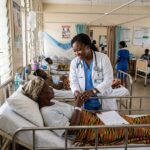
What happened next at the Dodowa facility reflects the kind of healthcare delivery that the policy is built to enable. A health worker on the ground, recognising the gravity of Beatrice’s condition and the need for specialist clinical decision-making, connected her to a doctor remotely via NeHSA Telehealth Consultation Platform. Through the virtual consultation, the doctor assessed Beatrice’s condition, made informed clinical decisions, and arranged for her to be admitted and placed under immediate care.
The telemedicine intervention bridged a gap that distance and cost had long made unbridgeable for patients in communities like hers. There was no delay for transport. There was no financial obstacle to the referral. There was no moment where Beatrice had to weigh whether she could afford to be seen. The system responded to her — quickly, coherently, and effectively.
Nurse Gloria Addo, who was present at the facility during Beatrice’s visit, described the moment with the kind of clarity that only comes from having watched something genuinely important unfold. The early detection, she said, saved the 53-year-old woman’s life. It is a statement that carries enormous weight when you understand the epidemiological context in which it sits.
Hypertension is estimated to affect approximately one in three adults across sub-Saharan Africa, and Ghana is no exception. The overwhelming majority of those individuals are undiagnosed — not because diagnosis is technologically difficult or clinically complex, but because the first step of walking into a health facility has historically come with a financial cost that many cannot absorb. A consultation fee here, a prescription charge there, a transport cost layered on top — for households operating on narrow margins, these are not inconveniences. They are genuine barriers that delay care until symptoms become crises, and crises become emergencies, and emergencies become fatalities.
Nurse Addo expressed genuine gratitude for the policy precisely because she understands this dynamic from the inside. Without free primary healthcare, she acknowledged, Mrs. Beatrice may never have come to the facility in the first place. That single observation captures the entire philosophical case for the initiative: access drives attendance, and attendance saves lives.
Ghana’s Free Primary Healthcare policy is a flagship government initiative designed to make first-level health services available to every Ghanaian at zero out-of-pocket cost. It targets community health centres, polyclinics, and primary care facilities — the frontline of the country’s health system — and it is structured to work in deliberate coordination with existing frameworks, including the National Health Insurance Scheme, the Ghana Medical Trust Fund, and the Christian Health Association of Ghana, known as CHAG. The coordination is intentional and essential. A policy operating in isolation from the broader health financing architecture risks creating duplication, administrative confusion, and funding gaps. Ghana’s approach, from the outset, has been to ensure coherence rather than competition between its various health initiatives.
This commitment to institutional alignment has drawn direct engagement and vocal endorsement from the World Health Organization. Dr. Fiona Braka, the WHO Representative for Ghana, has been unambiguous about both the significance of the policy and the depth of the technical collaboration supporting it.
We have been working very closely with the Ministry of Health and side-by-side, with the Ghana Health Service, with the National Health Insurance Authority, and CHAG, to prepare and to look at the technical coherence of the approach, ensuring that all these initiatives — the Health Insurance and the Ghana Medical Trust Fund and Free Primary Healthcare — have coherence between these initiatives and there's no duplication.
Dr Fiona Braka
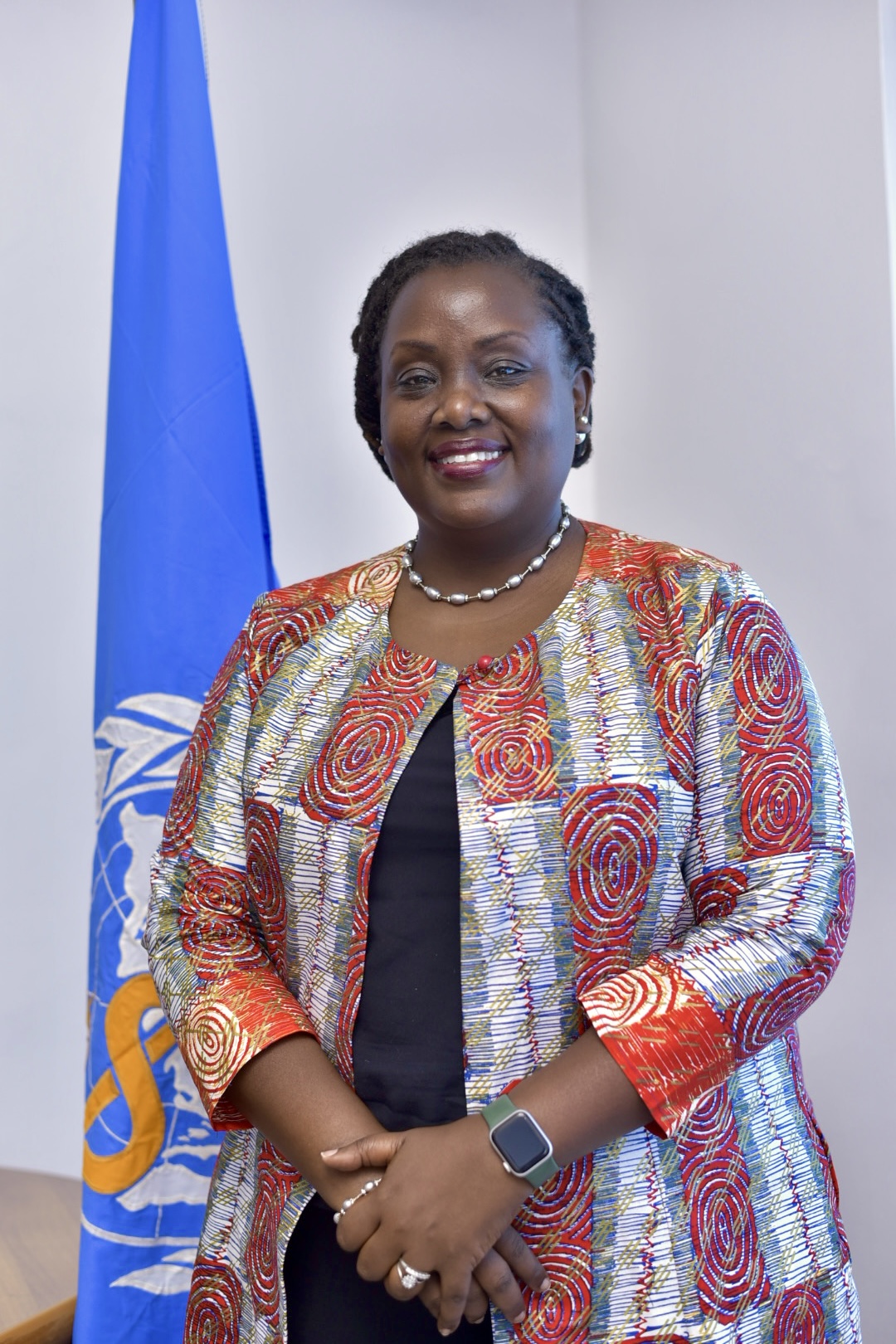
That statement by Dr. Fiona, is not simply diplomatic language. It describes a sustained, multi-institutional technical effort to make sure that when a patient like Beatrice walks into a facility, the system behind her is unified enough to respond without hesitation. Dr. Braka has also made clear that this policy places Ghana firmly on the path toward achieving Universal Health Coverage — the global health commitment that guarantees all people access to quality health services without suffering financial hardship in the process.
The significance of Universal Health Coverage as a target cannot be overstated in the Ghanaian context. The country has made substantial investments in health infrastructure over recent decades, from the establishment of the National Health Insurance Scheme in 2003 to the continuous expansion of community health centres across all sixteen regions. But infrastructure alone does not guarantee access. A health facility that sits empty because its catchment population cannot afford to use it is infrastructure in name only.
Free primary healthcare transforms those facilities from buildings into functioning points of care, removing the last financial excuse — or financial obstacle, depending on one’s perspective — that stands between a community member and early intervention. The WHO’s active involvement in the policy’s technical preparation signals something beyond diplomatic courtesy. It reflects institutional confidence that Ghana’s approach is sound, that the framework is built for scale, and that the model aligns with global best practice in health systems strengthening.
There is also something worth dwelling on in the specific mechanism that saved Beatrice’s life — the NeHSA Telehealth consultation between the health worker on the ground and the physician providing remote guidance. Telemedicine is not a new concept, but its integration into community-level primary care in Ghana represents a meaningful evolution in how the health system thinks about specialist access. Ghana’s specialists are heavily concentrated in urban centres, particularly in Accra and Kumasi.
For patients in peri-urban and rural communities, accessing specialist opinion has traditionally required either a referral letter and a long journey or, more commonly, waiting until a condition has advanced to the point where the journey becomes unavoidable. Virtual consultations collapse that distance. They allow a nurse in Dodowa to pull a physician into a patient encounter within minutes, enabling a clinical decision that would otherwise have taken days and cost money the patient does not have. As Ghana scales its free primary healthcare programme, telemedicine is likely to become one of its most powerful delivery tools — a force multiplier that extends the reach of a limited specialist workforce across an enormous geographic and demographic landscape.
The broader public health argument for investing in primary care is well established in the global literature, but it bears restating in the Ghanaian context because the evidence from the field is now supporting it so directly. Non-communicable diseases — hypertension, diabetes, chronic respiratory conditions, cardiovascular disease — now account for a growing proportion of Ghana’s disease burden. These are conditions that are manageable with consistent, early, affordable care and life-threatening when left undetected and untreated.
The tragedy of the pre-FPHC status quo was not that Ghana lacked the clinical knowledge to manage these conditions. It was that the financial architecture of care delivery ensured that millions of people would only encounter the health system once their conditions had already done serious damage. Free primary healthcare inverts this architecture. It places early detection — the moment where clinical intervention is cheapest, easiest, and most effective — within reach of every Ghanaian, regardless of income.
For Beatrice Elikplem, that inversion made the difference between a managed hypertensive crisis and an unmanaged medical catastrophe. For Ghana as a whole, it represents a structural reorientation of the health system away from reactive emergency management and toward proactive, community-rooted prevention. The policy, even in its pre-launch operational phase, has already demonstrated its value in clinical terms.
With WHO backing, multi-institutional technical alignment, and real patient outcomes emerging from facilities on the ground, the evidence base for the initiative’s effectiveness is building quickly. The question facing Ghana’s health authorities now is not whether free primary healthcare works — Beatrice’s story makes that answer obvious — but how rapidly and equitably the model can be expanded to reach every Ghanaian who needs it, in every community, before the next hypertensive crisis goes undetected.