
From September 16 to 19, 2025, Ghana became the focal point of continental collaboration in public health as the Ministry of Health and the Ghana Health Service, in partnership with the Africa Centres for Disease Control and Prevention (Africa
CDC), convened a four-day training workshop in Accra on Risk Communication and Community Engagement (RCCE). The event brought together RCCE network members from across Africa’s five regions—West, East, Central, North, and Southern Africa—with the aim of strengthening capacity, improving coordination, and embedding social and behavioral insights into public health strategies.
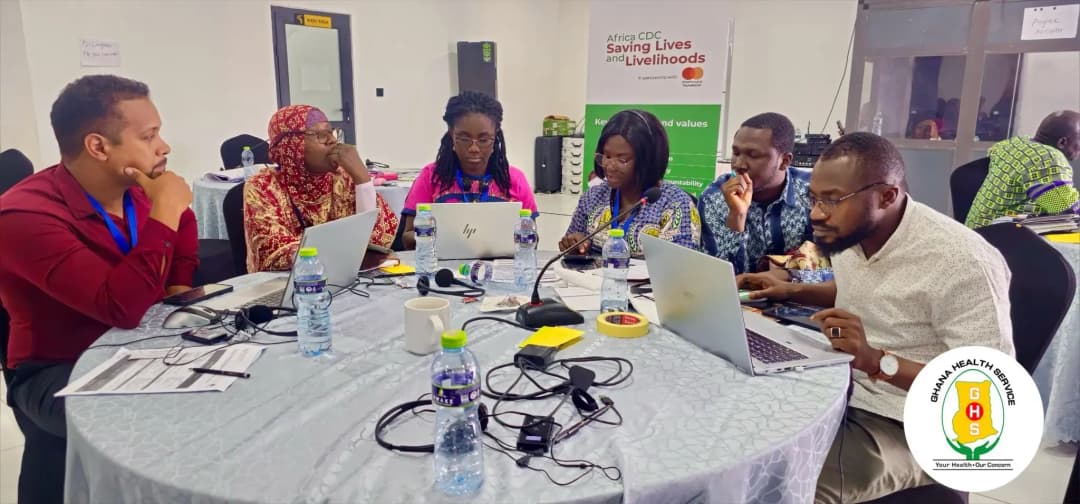
The workshop was designed not merely as a theoretical exercise but as a practical, interactive platform. Participants engaged in lectures, group exercises, panel sessions, and discussions that encouraged countries to share their unique challenges and propose solutions. This approach reflected the recognition that effective risk communication requires both technical knowledge and the ability to adapt strategies to diverse cultural and social contexts.
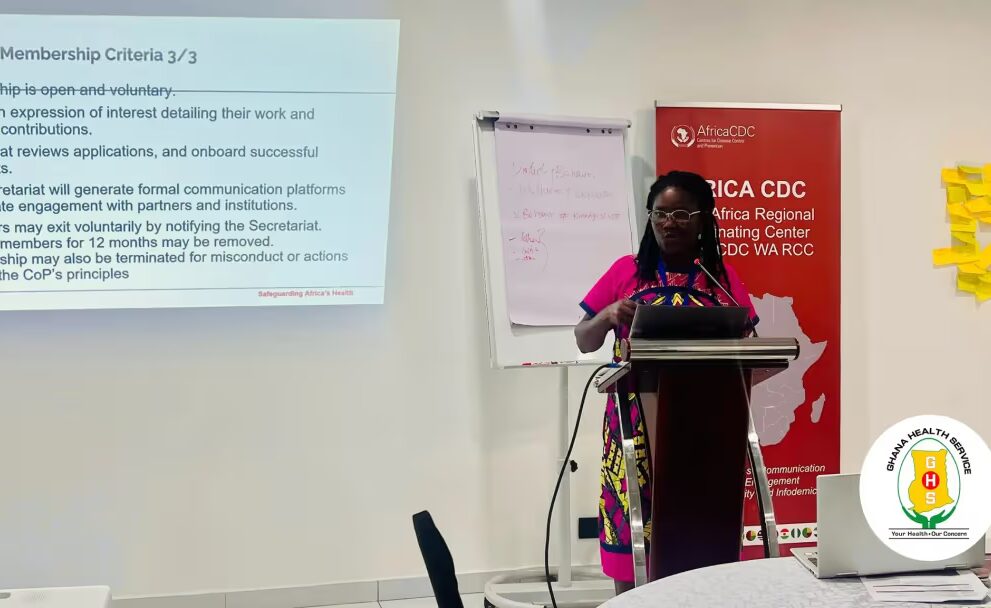
Setting the tone for the gathering, Mrs. Mabel Kissiwaa Asafo, Acting Director of the Health Promotion Division of the Ghana Health Service and Chair of the African Union RCCE Community of Practice (CoPa), delivered the welcome address on behalf of the Acting Director-General of the Service, Professor Samuel Kaba Akoriyea. In her remarks, she reminded participants that “capacity building must remain at the core of Africa’s health systems,” stressing the importance of stronger social listening, evidence-based strategies, and deeper community ownership to translate science into trust and drive sustainable change.
By the close of the meeting, Mrs. Asafo’s message had come full circle. She expressed gratitude to participants for their active engagement and openness in sharing experiences, particularly on Joint External Evaluation and behavioral intelligence. She noted that guidelines had been presented for review and terms of reference shared with members, encouraging continued dialogue and collaboration. “The collective effort that has gone into this workshop is a testament to what we can achieve when we work together,” she said, reaffirming the importance of advancing RCCE across the continent.


The workshop was more than a training session; it was a continental dialogue that stitched together voices and insights from across Africa. By creating a space where countries could exchange lessons learned and strategies tested in real-world crises, the event laid the groundwork for stronger community engagement in future health emergencies. The emphasis on social and behavioral insights reflected a growing recognition that public health interventions succeed not only through medical expertise but also through trust, communication, and community participation.
As Africa continues to face complex health challenges, from infectious disease outbreaks to the growing burden of non-communicable diseases, the Accra workshop demonstrated the value of regional solidarity and shared learning. It highlighted the need for continuous investment in communication strategies that resonate with communities, build resilience, and ensure that scientific guidance translates into action.
In the words of the Ghana Health Service’s Public Relations Unit, which reported on the event, the workshop “stitched together a continental tapestry of voices and insights that transcend borders, laying the groundwork for stronger community engagement”. This sentiment captures the spirit of the gathering: a collective effort to strengthen Africa’s ability to respond to health threats through communication, collaboration, and community trust.