
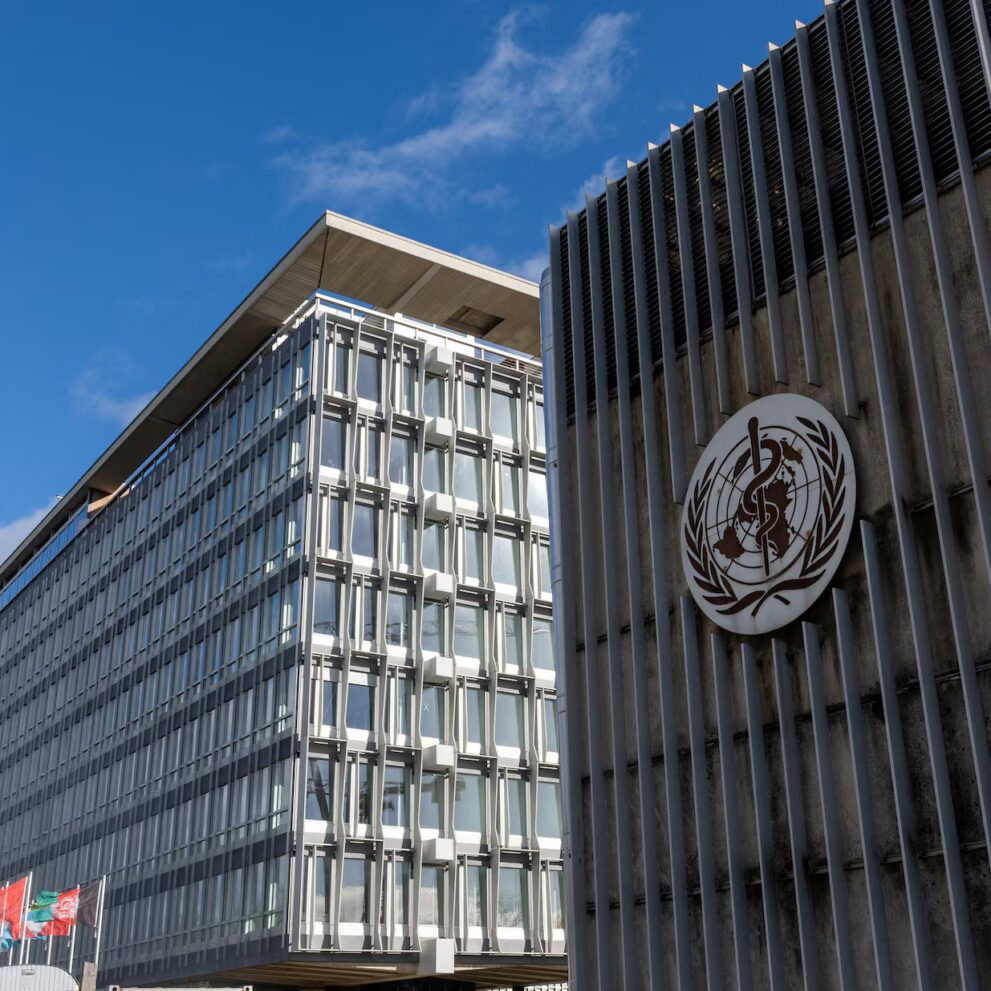
The World Health Organization has unveiled a decisive six-month, $518 million plan aimed at halting the rapid spread of the 2026 Ebola outbreaks in the Democratic Republic of Congo and Uganda, while strengthening preparedness across neighboring countries. This coordinated strategy focuses on immediate containment, accelerated testing and surveillance, enhanced border screening, community engagement, and targeted support for frontline health facilities. The scale and urgency of the response reflect the seriousness of the current crisis and the global stakes for epidemic control.
Global health authorities are confronting a complex emergency driven by a rare strain known as Bundibugyo, for which there is currently no approved vaccine or specific treatment. That scientific reality raises the bar for containment efforts and places a premium on rapid detection, safe patient care, and trust-building with affected communities. The Africa Centres for Disease Control and Prevention and WHO are coordinating to deploy resources where they will have the greatest impact, while urging donors and governments to match commitments with swift action.
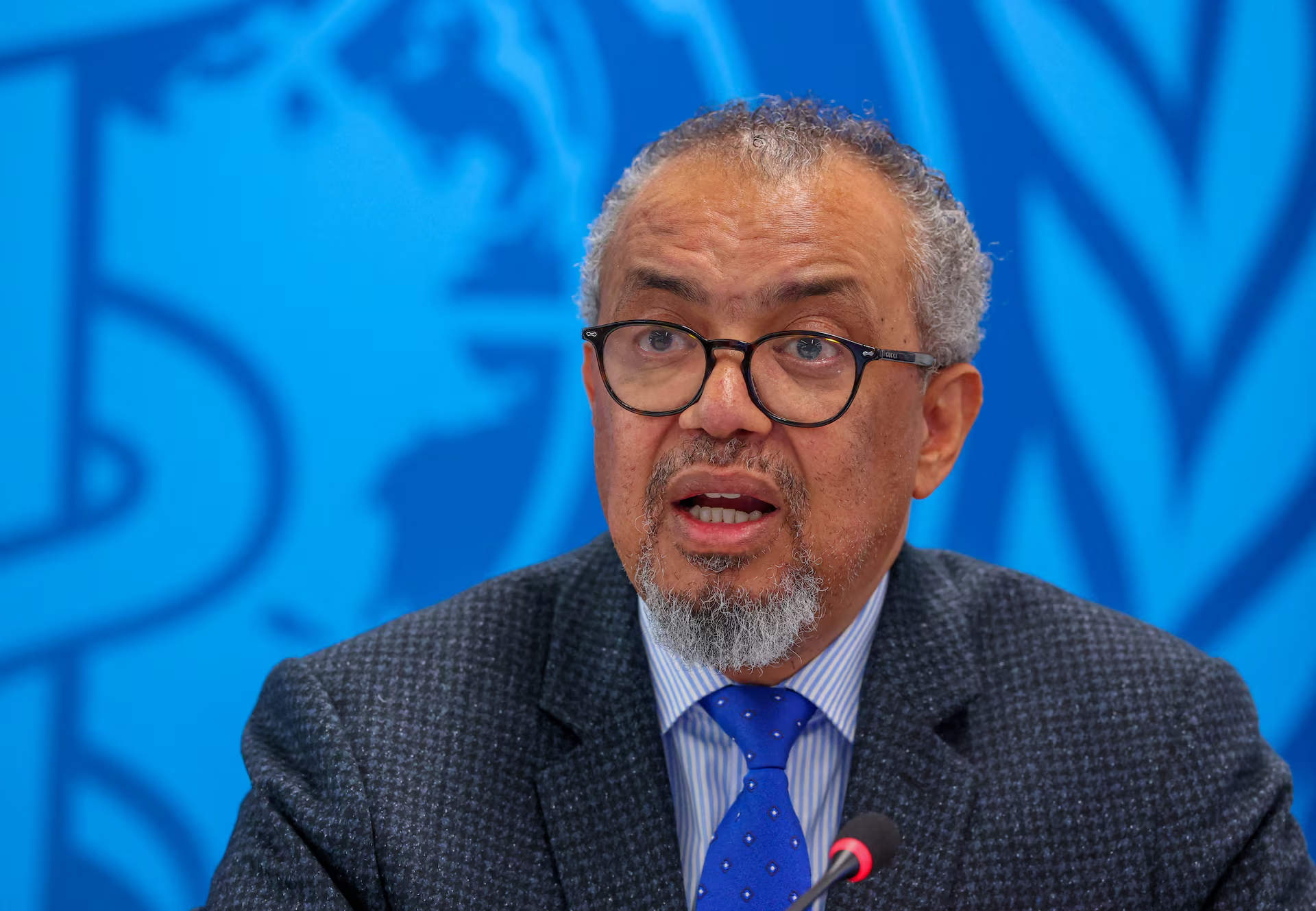
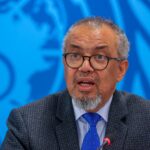
The outbreak is moving fast and we are still playing catch-up. Containing Ebola requires political commitment, sustained finances and trust in engaging the communities.
WHO Director-General, Tedros Adhanom Ghebreyesus
These statements capture the dual technical and social dimensions of epidemic response: logistics and science alone are not enough without local cooperation and transparent communication.
Donor pledges to date have been substantial but incomplete. More than $300 million has been pledged so far, though WHO officials note that initial tallies were revised and the gap between needs and funding remains significant. Rapid, reliable financing is essential to sustain surveillance teams, laboratory capacity, protective equipment, safe transport, and the security measures needed to protect health workers and burial teams operating in volatile areas. Without predictable funding, response operations risk being fragmented and short-lived.
Testing and diagnostics have emerged as a critical bottleneck. Early in the outbreak, commonly used Ebola tests failed to detect the Bundibugyo strain, producing delays that allowed the virus to spread undetected for weeks. These diagnostic gaps have slowed case confirmation and hampered contact tracing, making it harder to isolate cases and break chains of transmission. Strengthening laboratory networks, deploying strain-sensitive assays, and reducing turnaround times for results are immediate priorities for the WHO plan.
Security and community trust are intertwined challenges. Reports of attacks on burial teams and treatment centers have complicated response efforts and highlighted the need for culturally sensitive engagement strategies. The UN peacekeeping mission has contributed armoured vehicles to protect response teams operating in high-risk zones, reflecting the intersection of public health and security in outbreak settings. Building trust requires consistent, respectful dialogue with local leaders, transparent reporting of cases, and visible measures to protect both patients and responders.
What this means for neighboring countries and international travelers is straightforward: preparedness measures must be scaled up now. Enhanced border screening, rapid case detection at points of entry, and clear protocols for suspected cases are essential to prevent cross-border spread. Health ministries should prioritize training for frontline clinicians, ensure laboratory networks can identify the Bundibugyo strain, and coordinate with international partners to secure necessary supplies. For the public, the most effective protections remain early recognition of symptoms, prompt medical evaluation, and adherence to public health guidance issued by local authorities.
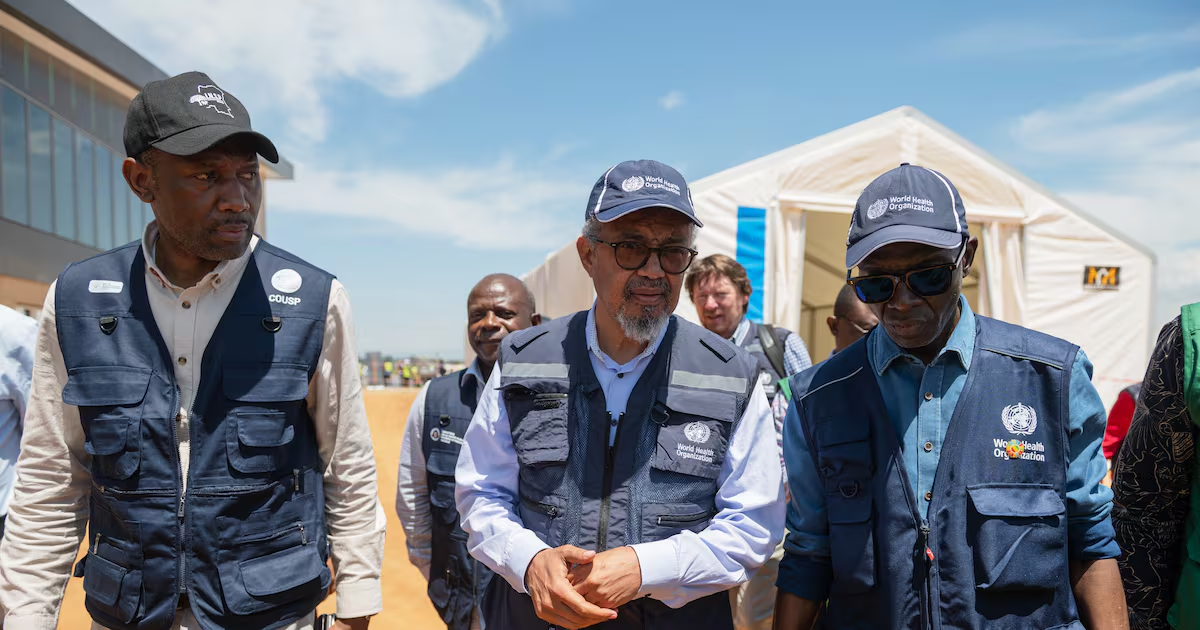
The human cost of delayed action is stark. As of early June 2026, confirmed cases and deaths have been reported in multiple provinces, and the outbreak’s trajectory has prompted WHO to declare a public health emergency of international concern. Rapid mobilization of resources, combined with community-centered strategies, offers the best path to reversing transmission trends. The international community’s response in the coming weeks will determine whether this outbreak is contained or escalates further.
For policymakers and donors, the message is clear: sustained financing and political commitment are non-negotiable. Short-term pledges that fail to cover the full operational horizon will leave gaps in surveillance, treatment, and prevention. Investing now in robust testing, protective equipment, secure logistics, and community outreach will pay dividends by preventing wider spread and reducing long-term economic and social disruption. The WHO plan is a roadmap, but it requires partners to follow through with the resources and coordination it demands.
The WHO’s $518 million emergency plan is a critical, time-limited effort to stop a fast-moving Ebola outbreak driven by a rare strain. Success depends on rapid diagnostics, secure operations, community trust, and full funding. As WHO officials warn, the outbreak is moving quickly and the world must not lag behind. The coming weeks will test global solidarity, scientific agility, and the ability of health systems to protect vulnerable populations.
Source: WHO launches $518 million plan to curb Africa Ebola outbreak | Reuters